
 Free consultation
Lasers · IRVINE, CA
Laser Vein Treatment in Irvine, CA
For small surface veins — and a referral when the problem is deeper.
Book a consultation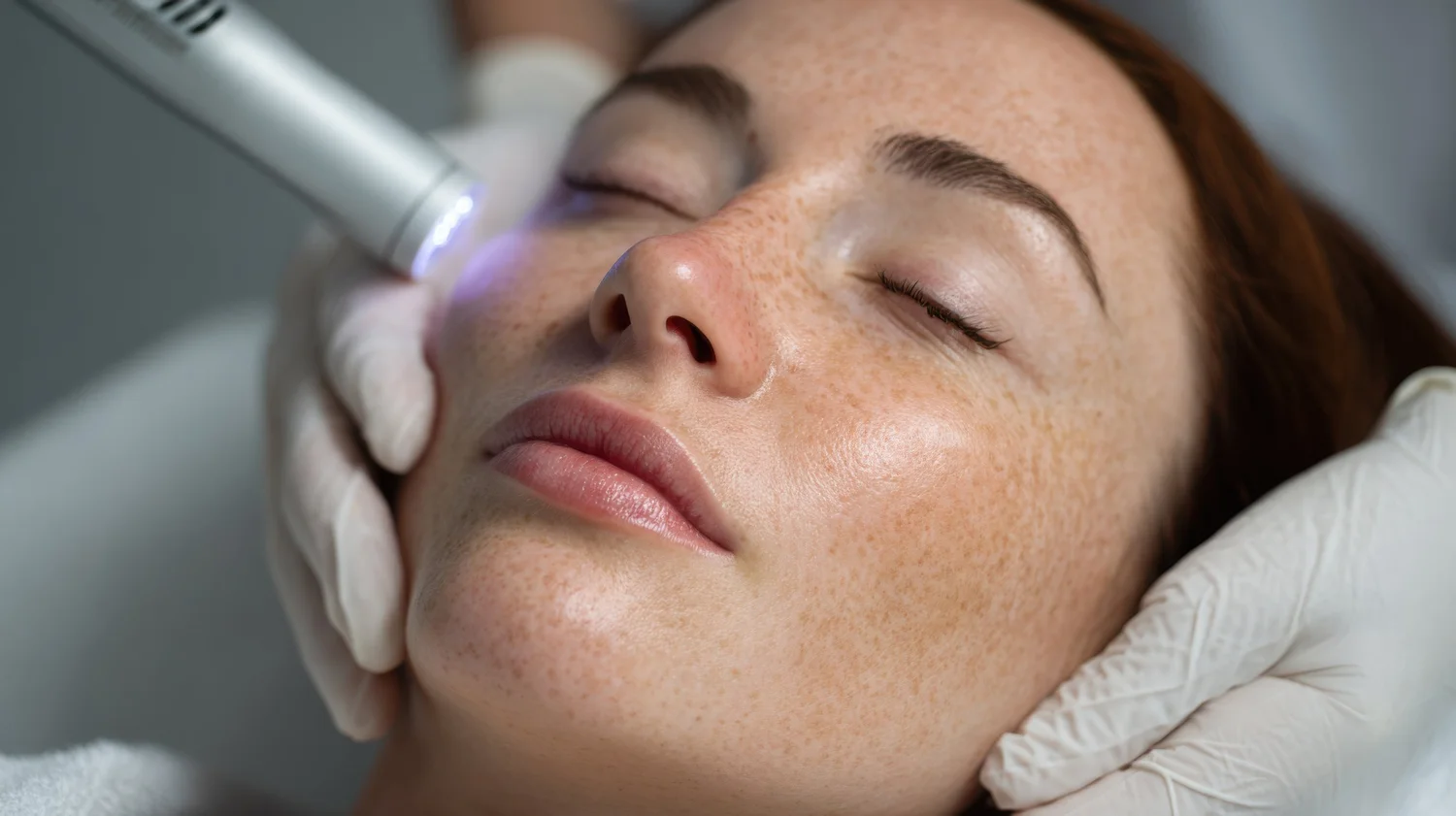
- Performed byA licensed medical professional, physician-supervised
- Typical sessionsOne to three
- DowntimeNone; redness for a few hours
- Legs firstVascular assessment where symptoms suggest it
Laser vein treatment targets small visible blood vessels — the fine red or purple threads on the nose and cheeks, and spider veins on the legs. NuVie MD performs it at its physician-owned practice on Barranca Parkway in Irvine, California.
The laser energy is absorbed by haemoglobin inside the vessel, heating and collapsing it. The body then reabsorbs the treated vessel over the following weeks, and blood reroutes through other vessels, so nothing is lost. Sessions are short and most people need one to three.
One important caveat for legs. Spider veins are sometimes a surface sign of underlying venous insufficiency, and treating the surface while the underlying problem continues means they return. If your legs ache, swell or feel heavy, or you have varicose veins, you need a vascular assessment first — and we would rather send you for one than sell you sessions that will not hold.
Book a consultationCandidacy
Which veins respond.
Small, superficial vessels respond best: facial telangiectasias on the nose, cheeks and around the nostrils, and fine spider veins on the legs. These sit close to the surface where the laser can reach them, and they are small enough to collapse and be reabsorbed.
Larger, bulging or rope-like veins do not respond to surface laser treatment and need a different approach — sclerotherapy or a vascular procedure, usually after an ultrasound assessment. Blue reticular veins that feed a spider cluster often need treating before the spiders will clear, which is another reason leg veins are assessed rather than simply treated.
See a vascular specialist first if you have
- Aching, heaviness or throbbing in the legs, particularly at the end of the day.
- Ankle swelling.
- Varicose veins — visibly bulging, rope-like veins.
- Skin discolouration or thickening around the ankle.
- A history of deep vein thrombosis.
- Any leg ulcer, current or healed.
Your visit
What happens at a session.
Assessment
Vessels are assessed for size, depth and colour, and leg veins are assessed for signs of underlying venous disease.
Preparation
The area is cleaned and protective eyewear is fitted.
Treatment
The laser is applied vessel by vessel. Most people describe a hot snapping sensation. Sessions are short — often 15 to 30 minutes.
Immediately after
Redness and slight swelling along the treated vessels. Some vessels disappear during treatment; others darken first.
The following weeks
Treated vessels fade as they are reabsorbed. Full clearing of a vessel takes several weeks.
Review
Further sessions where vessels persist, usually spaced several weeks apart.
Come prepared
Questions to ask.
Do my leg veins need a vascular assessment first?
A good answer sounds like: A willingness to refer where symptoms or findings suggest venous insufficiency, rather than treating the surface regardless.
Will laser work on these particular veins, or do I need sclerotherapy?
A good answer sounds like: An honest answer based on vessel size and depth.
How many sessions do you expect?
A good answer sounds like: A specific range, usually one to three.
What is my risk of brown staining or pigment change?
A good answer sounds like: A real assessment, particularly for leg veins and deeper skin tones.
What causes mine, and will more appear?
A good answer sounds like: A discussion of the underlying cause, because that determines whether maintenance is needed.
Before your visit
Your questions,
welcomed.
Will the veins come back?
A treated vessel that has been collapsed and reabsorbed does not come back. What happens instead is that new vessels appear, because the conditions that produced the first ones have not changed — sun damage and rosacea on the face, and genetics, prolonged standing, pregnancy or venous insufficiency in the legs.
So treatment clears what is there, and maintenance deals with what arrives later. Most people have an occasional session rather than a repeating course. For legs specifically, if veins return quickly and in number, that is a reason to have venous insufficiency assessed rather than to book more sessions.
Is it the same as IPL for redness?
They overlap but they are used differently. IPL treats a whole area at once and is better for diffuse background redness and the generalised flush of rosacea, where there is no single vessel to aim at.
Laser vein treatment targets individual visible vessels — the distinct red thread across the side of the nose that IPL often leaves behind. Many people with rosacea end up having both: IPL for the background, laser for the stubborn individual vessels. Which you need depends on what is actually on your skin, and an in-person look settles it quickly.
Where can I get laser vein treatment in Irvine, CA?
NuVie MD performs laser vein treatment at 4980 Barranca Parkway, Suite 201, Irvine, CA 92604, Tuesday to Friday, 9:30 am to 5:30 pm. Call (949) 485-2100 or book a consultation.
How does it work?
Laser energy is absorbed by haemoglobin inside the vessel, heating and collapsing it. The body reabsorbs the treated vessel over the following weeks and blood reroutes through other vessels, so nothing is lost.
How many sessions will I need?
Most people need one to three, spaced several weeks apart. Facial vessels often respond in fewer sessions than leg veins.
Does it hurt?
Most people describe a hot snapping sensation, similar to a small elastic band. Sessions are short, typically 15 to 30 minutes.
Is there downtime?
None. Expect redness and slight swelling along the treated vessels for a few hours, and possible small bruises on the legs. Avoid heat and exercise for 24 to 48 hours.
Will my veins come back?
A treated vessel does not return once reabsorbed, but new vessels can appear because the underlying cause continues — sun damage or rosacea on the face, genetics or venous insufficiency in the legs. Occasional maintenance is common.
Can you treat varicose veins?
No. Bulging, rope-like varicose veins need vascular assessment and a different procedure. Surface laser treats small spider veins and thread veins only. We will refer you if that is what you have.
When should I see a vein specialist instead?
If your legs ache, feel heavy or swell, if you have visible varicose veins, skin changes around the ankle, a history of deep vein thrombosis, or any leg ulcer. Treating the surface while an underlying problem continues means the veins return.
Is it safe on darker skin?
Yes, with appropriate wavelength and conservative settings, though the risk of post-inflammatory pigment change is higher and should be discussed. Leg veins carry a higher risk of brown staining than facial vessels in any skin tone.
Can I have it while pregnant?
No. NuVie MD defers laser treatment during pregnancy. Veins that appear during pregnancy often improve on their own in the months after delivery, so waiting is sensible in any case.
Your provider
Who performs laser vein treatment.
Laser vein treatment at NuVie MD is performed by a licensed medical professional under the supervision of Christina Jenkins, MD. Part of the assessment is recognising when leg veins are a sign of underlying venous insufficiency, which needs vascular assessment rather than surface treatment.
Getting here
Laser vein treatment in Irvine.
We are on Barranca Parkway in Irvine, minutes from Woodbridge and the 405 and 5 freeways, with free parking in the building lot. Patients travel to us from Tustin, Lake Forest, Costa Mesa, Newport Beach, Huntington Beach and UCI.
4980 Barranca Parkway, Suite 201
Irvine, CA 92604
Tuesday–Friday, 9:30 am–5:30 pm
(949) 485-2100
info@nuviemd.com
Book a consultation
Safety
Risks and side effects.
Common and expected
- Redness and mild swelling along the treated vessels for a few hours
- A hot snapping sensation during treatment
- Treated vessels darkening before they fade
- Small bruises, particularly on the legs
- Temporary raised welts along the vessel
Uncommon but serious
- Blistering or burns
- Post-inflammatory hyperpigmentation, particularly on deeper skin tones and on legs
- Hypopigmentation
- Brown staining along a treated leg vein, which can persist for months
- Matting: a cluster of fine new vessels appearing near a treated area
- Scarring, uncommon
- Incomplete clearance
Call us right away if
- You develop a blister or an open area
- You have increasing pain, spreading redness or signs of infection
- A treated area becomes persistently brown or lightened
- You develop leg pain, swelling or warmth — this needs urgent assessment
Critical rules
Before and after.
Before your appointment
- No sun exposure or self-tanner for two weeks.
- Tell us about any history of blood clots or venous disease.
- Tell us about any light-sensitising medication.
- Avoid blood-thinning supplements for several days where your prescriber agrees it is safe.
- Reschedule if the area is tanned or sunburned.
After your appointment
- No saunas, steam, hot baths or strenuous exercise for 24 to 48 hours — heat dilates vessels.
- Wear compression stockings after leg treatment if advised.
- Daily sunscreen on treated facial areas.
- Avoid alcohol and hot drinks for the rest of the day if you have rosacea; both dilate vessels.
- Expect vessels to fade over weeks, not immediately.
Sources used on this page
This page is information, not medical advice, and it does not create a patient relationship. Your plan is decided at an in-person consultation.