
 Free consultation
Microneedling & PRP · IRVINE, CA
PRP for Face and Body in Irvine, CA
Your own platelets, used where the evidence supports it.
Book a consultation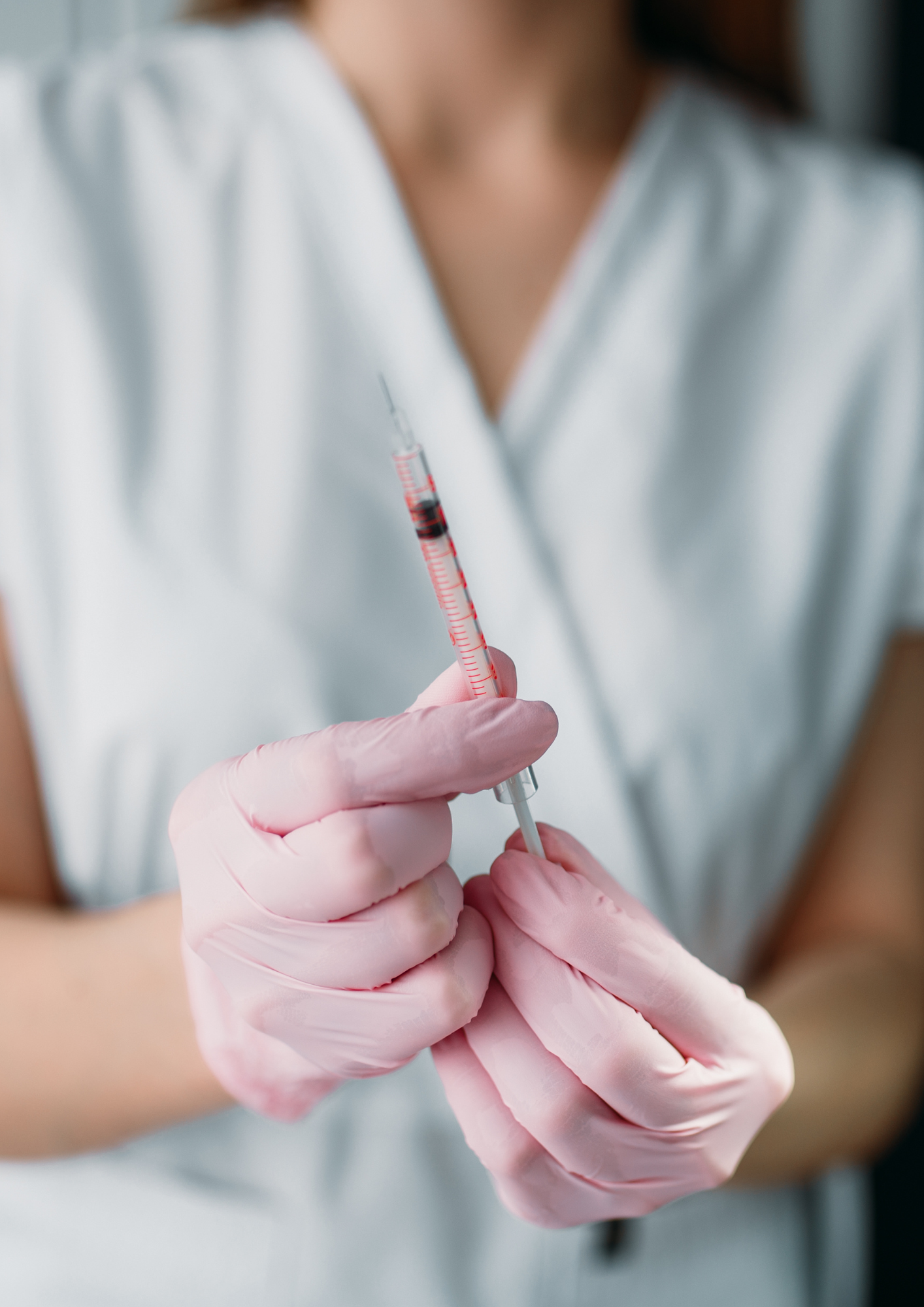
- SourceYour own blood, drawn at your appointment
- Performed byLicensed medical staff, physician-supervised
- Most often usedWith microneedling, in the same visit
- FDA statusNot FDA-approved for aesthetic indications
PRP — platelet-rich plasma — uses your own blood. A small sample is drawn and spun in a centrifuge to separate and concentrate the platelets, which carry growth factors involved in healing. The concentrate is then applied or injected into the treatment area. NuVie MD performs it at its physician-owned practice in Irvine, California.
On the face and body it is most often added to microneedling, so the growth factors reach the dermis through the fresh micro-channels rather than sitting on the surface. The aim is better texture, tone and overall skin quality rather than a structural change.
An honest note on evidence: PRP is not an FDA-approved treatment for aesthetic use. Its strongest evidence is in hair restoration. For facial skin quality the published evidence is positive but modest and the preparation methods vary between clinics, which makes results harder to compare. It is a reasonable add-on, not a transformative treatment, and it is entirely reasonable to decline it.
Book a consultationHow it works
What platelets actually do.
Platelets are best known for clotting, but they also release growth factors that direct tissue repair — recruiting cells to a wound, prompting new blood vessel formation and stimulating collagen production. Concentrating them and placing them into skin that has just been deliberately micro-injured is an attempt to amplify a repair response that is already underway.
Because the material is your own, there is no risk of allergic reaction or rejection. The main safety considerations are the blood draw itself and the handling of the sample, which is why this belongs in a medical setting.
The variability is in the preparation. Different systems produce different platelet concentrations and different amounts of white blood cells, and there is no single standard. That is a genuine reason published results differ, and a reason to ask what system a clinic uses.
Candidacy
Who it suits.
PRP suits people looking to improve overall skin quality — texture, tone and the fine crepey quality that develops on the cheeks, neck and under the eyes — usually alongside a treatment that creates the conditions for it to work. It will not add volume, lift loose skin or remove deep lines.
PRP may not be suitable if you have
- A platelet or bleeding disorder, or are on anticoagulant therapy.
- An active infection, or an infection in the treatment area.
- A blood-borne infection, or a haematological condition.
- Active cancer, or are undergoing cancer treatment.
- Severe anaemia.
- Are pregnant or breastfeeding.
- Had a recent course of corticosteroids.
Your visit
What happens at your appointment.
Blood draw
A small sample is taken from your arm, as for a routine blood test. Eat and drink normally beforehand.
Processing
The sample is spun in a centrifuge for several minutes to separate and concentrate the platelets. You wait while numbing takes effect.
Numbing
Topical anaesthetic is applied to the treatment area.
Treatment
The PRP is applied during and after microneedling, or injected, depending on the plan for your skin.
Immediately after
Redness and warmth, as with microneedling. The plasma is left on the skin for a period before you cleanse.
Results
Skin quality changes gradually over the following weeks as collagen responds. A course of three sessions is typical.
Come prepared
Questions to ask.
What system do you use to prepare the PRP?
A good answer sounds like: A named system. Preparation methods vary widely and are a real source of differing results.
What does the evidence show for my concern?
A good answer sounds like: An honest answer: stronger for hair, more modest for facial skin quality.
What is this adding over the base treatment alone?
A good answer sounds like: A realistic description of incremental benefit, not a transformation.
How many sessions?
A good answer sounds like: Usually a course of three, with a specific interval.
Is there a reason I should not have this?
A good answer sounds like: A review of bleeding disorders, anticoagulants, anaemia and other contraindications.
Before your visit
Your questions,
welcomed.
Is PRP actually proven to work?
It depends on what for. For androgenetic hair loss the evidence is reasonably good, and PRP is widely used for it. For facial skin quality the published evidence is positive but modest: studies generally show improvements in texture and fine lines, and they are usually small, with varied preparation methods and varied ways of measuring the result.
What that means for you is a sensible expectation. PRP added to microneedling is a reasonable enhancement with a good safety profile and low risk, because the material is your own. It is not a replacement for the treatments that produce structural change. Any clinic describing it as a facelift in a syringe is overselling it, and it is perfectly reasonable to have microneedling without it.
Is it the same as a "vampire facial"?
That is the popular name for PRP applied with microneedling, so in substance yes. The name comes from the appearance of plasma on the skin during treatment rather than from anything about how it works.
The name is worth separating from the standard of care. PRP involves drawing, processing and reapplying blood, and there have been documented infection transmissions where that was done without proper medical protocols. It belongs in a medical practice with licensed staff and single-use equipment, which is how it is performed here.
Why should I avoid anti-inflammatories around treatment?
Because the treatment works through inflammation. PRP and microneedling both rely on provoking a controlled healing response, and anti-inflammatory medication such as ibuprofen suppresses exactly that process. Taking it around your appointment may blunt the result.
The usual advice is to avoid non-steroidal anti-inflammatories for several days before and after, using paracetamol instead if you need pain relief. Never stop a prescribed medication on the basis of this — ask your prescriber, and tell us what you take.
Where can I get PRP treatment in Irvine, CA?
NuVie MD performs PRP at 4980 Barranca Parkway, Suite 201, Irvine, CA 92604, Tuesday to Friday, 9:30 am to 5:30 pm. Call (949) 485-2100 or book a consultation.
Is PRP FDA-approved?
No. PRP is not FDA-approved for aesthetic indications. It uses your own blood rather than a manufactured product, and its use in aesthetics is off-label. The evidence is strongest for hair restoration and more modest for facial skin quality.
Does it use my own blood?
Yes. A small sample is drawn from your arm at your appointment and spun in a centrifuge to concentrate the platelets, which are then applied or injected. Nothing from a donor or a manufacturer is used.
How many sessions will I need?
A course of three is typical, spaced several weeks apart, with results developing gradually over the following months as collagen responds.
Does it hurt?
The blood draw feels like a routine blood test. The treatment itself is performed under topical numbing and most people find it comfortable, with the sensation depending on what PRP is combined with.
Is there downtime?
Expect redness, warmth and mild swelling for one to three days if combined with microneedling, and possible bruising at the blood draw site. Most people return to work the next day.
Can I take ibuprofen afterwards?
Avoid non-steroidal anti-inflammatories for 24 to 48 hours, because the treatment works by provoking a healing response and anti-inflammatories suppress it. Paracetamol is the alternative. Never stop prescribed medication without asking your prescriber.
Is it the same as a vampire facial?
Yes, in substance. "Vampire facial" is the popular name for PRP applied with microneedling. Because it involves handling blood, it should only be performed in a medical setting with licensed staff and single-use equipment.
Can I have it if I am on blood thinners?
Tell us at consultation. Anticoagulant therapy and bleeding or platelet disorders may make PRP unsuitable, and this is assessed individually. Never stop a prescribed anticoagulant on your own.
Can I have it while pregnant?
No. NuVie MD defers PRP during pregnancy and breastfeeding.
Will it replace filler or tightening treatments?
No. PRP aims at skin quality — texture and tone — rather than structure. It does not add volume or lift loose skin. It is used alongside those treatments rather than instead of them.
Your provider
Who performs PRP treatment.
PRP at NuVie MD involves drawing and processing your blood, so it is performed by licensed medical staff under the supervision of Christina Jenkins, MD, in a medical practice rather than a salon setting. PRP here is prepared with the Regen Lab system, spun on Drucker Diagnostics centrifuges. The practice does not publish a target platelet concentration, so if that number matters to you, ask at your consultation.
Getting here
PRP in Irvine.
We are on Barranca Parkway in Irvine, minutes from Woodbridge and the 405 and 5 freeways, with free parking in the building lot. Patients travel to us from Tustin, Lake Forest, Costa Mesa, Newport Beach, Huntington Beach and UCI.
4980 Barranca Parkway, Suite 201
Irvine, CA 92604
Tuesday–Friday, 9:30 am–5:30 pm
(949) 485-2100
info@nuviemd.com
Book a consultation
Safety
Risks and side effects.
Because PRP uses your own blood, allergic reaction and rejection are not concerns. The risks relate to the draw, the handling of the sample, and the treatment it is combined with.
Common and expected
- Bruising at the blood draw site
- Redness, swelling and warmth in the treated area for one to three days
- Tenderness and a sandpaper texture if combined with microneedling
- Light-headedness during the blood draw
Uncommon but serious
- Infection, including from improper handling of blood products
- Prolonged swelling or bruising
- Nodule formation at an injection site
- No noticeable benefit
Call us right away if
- You develop spreading redness, heat, discharge or fever
- Swelling worsens rather than settles after three days
- You develop a persistent lump at a treated site
Critical rules
Before and after.
Before your appointment
- Eat and drink normally before your appointment; blood is drawn.
- Hydrate well the day before — it makes the draw easier.
- Avoid non-steroidal anti-inflammatories for several days where your prescriber agrees it is safe.
- Avoid alcohol for 24 hours.
- Tell us about any bleeding disorder, anticoagulant or recent corticosteroid course.
After your appointment
- Avoid anti-inflammatory medication for 24 to 48 hours; it works against the treatment.
- No saunas, steam, hot yoga or strenuous exercise for 24 to 48 hours.
- Follow the aftercare for whichever treatment PRP was combined with.
- Daily sunscreen.
- Expect gradual change over weeks rather than an immediate result.
Sources used on this page
This page is information, not medical advice, and it does not create a patient relationship. Your plan is decided at an in-person consultation.