
 Free consultation
Lasers · IRVINE, CA
PicoLazer in Irvine, CA
A picosecond laser that works by pressure rather than heat — which is why it is the pigment option for deeper skin tones.
Book a consultation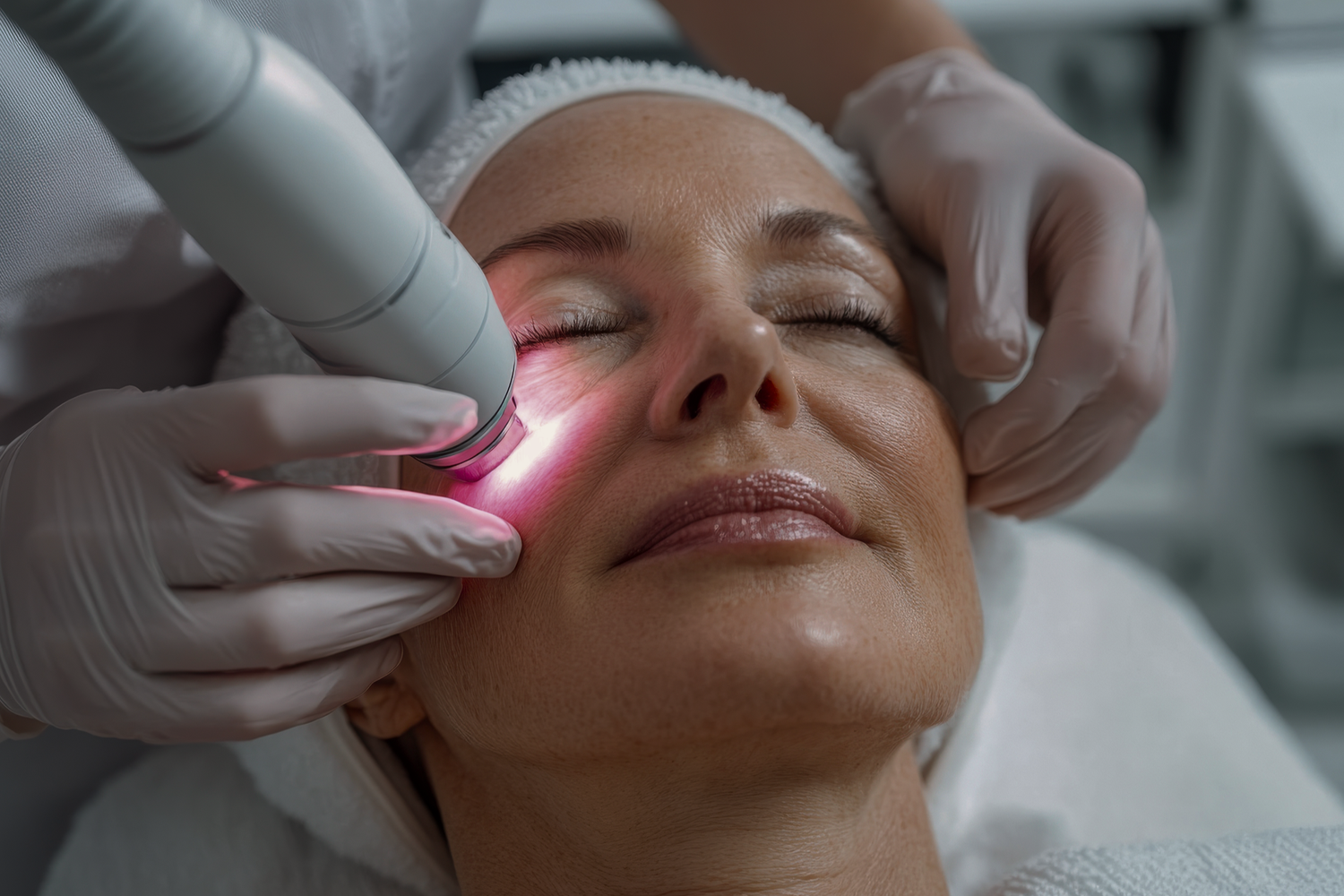
- Performed byA licensed medical professional, physician-supervised
- OversightChristina Jenkins, MD, owner and medical director
- MechanismPhotomechanical — pressure, not heat
- Skin tonesIncluding Fitzpatrick IV and Asian skin, with a test spot
PicoLazer is a picosecond laser treatment for pigmentation — sun spots, post-inflammatory marks from acne, uneven tone and the appearance of enlarged pores. NuVie MD performs it at its physician-owned practice on Barranca Parkway in Irvine, California, under the supervision of Christina Jenkins, MD.
Its pulses are measured in trillionths of a second, which is short enough to shatter pigment with a pressure wave instead of cooking it with heat. Less heat in the surrounding skin means a lower risk of the rebound darkening that makes conventional lasers risky on deeper skin tones, which is why this is the pigment treatment offered here for Fitzpatrick IV and Asian skin.
Most people need a short course rather than one session, there is little or no downtime, and a test spot is performed before a course on deeper skin tones. Melasma specifically is managed rather than cured, and any clinic that tells you otherwise has not treated much of it.
Book a consultationCandidacy
What PicoLazer treats, and what it does not.
PicoLazer is a pigment and texture treatment. It is used for sun spots and age spots, post-inflammatory hyperpigmentation left behind by acne, uneven tone, dullness, the look of enlarged pores, and as one part of a melasma plan. It is not a tightening treatment, it does not replace volume, and it will not resolve active acne.
Melasma deserves its own sentence, because it behaves differently from every other pigment condition. It is a chronic, relapsing condition driven by sun, visible light, heat and hormones, and it flares. The realistic goal is control: lighter, less noticeable patches held steady with daily protection and topical treatment, with laser as one supporting part. Aggressive treatment makes melasma worse more often than it makes it better.
Tell us before you book if
- You are pregnant or breastfeeding — pigment treatment is deferred.
- You have melasma, so the plan can be built around it rather than against it.
- You have taken isotretinoin in the last six months.
- You have a history of keloid scarring or of pigment darkening after a previous treatment.
- You take a medication that increases light sensitivity.
- You get cold sores and want the area around the mouth treated.
- You have a recent tan or have used self-tanner in the last two weeks.
How it works
Why picosecond matters for deeper skin.
Most lasers used for pigment work photothermally: they heat the pigment and the tissue around it. On lighter skin that heat is tolerated. On deeper skin, where there is far more melanin in the epidermis itself, that heat is absorbed broadly and the skin responds by producing more pigment. The result is post-inflammatory hyperpigmentation — the treatment making the problem worse, which is exactly what people with Fitzpatrick IV and above have learned to fear.
A picosecond pulse is so short that the energy is delivered before it has time to spread as heat. The pigment is fragmented by a rapid pressure wave instead, a photomechanical effect, and the surrounding tissue stays much cooler. Less heat means less inflammation, and less inflammation means a lower risk of rebound darkening.
Lower risk is not no risk. A test spot before a course is how the response of your particular skin is observed rather than assumed, and it is standard practice here for deeper skin tones. It is also the thing most often skipped at clinics where things go wrong.
Your visit
What happens at a session.
Assessment and diagnosis
Identifying what the pigment actually is matters more than the device. Sun damage, post-inflammatory marks and melasma look similar and are treated differently; melasma treated as though it were sun damage gets worse.
Test spot
For deeper skin tones, a small area is treated and reviewed before a course begins, so the settings are confirmed against your skin.
Preparation
The area is cleaned and numbing cream is applied where you want it. Protective eyewear is worn throughout.
Treatment
The handpiece passes over the area. Most people describe brief snapping sensations, more noticeable over denser pigment.
Immediately after
Mild redness and warmth for a few hours. Treated spots often darken before they clear, which is the pigment working its way out rather than a bad sign.
The following weeks
Fragmented pigment clears gradually. Darkened spots flake away over one to two weeks, and the full change from a session shows over several weeks.
The long game
What actually controls pigment over a year.
Procedures are the visible part of pigment treatment and the smaller part of the result. What holds a result is daily protection and consistent topical work, which is unglamorous and is why so many people cycle through clinics without lasting improvement.
Sun protection for pigment means broad-spectrum SPF 30 or higher, applied every day regardless of weather and reapplied through the day, and — for melasma specifically — a tinted formulation containing iron oxides, because visible light provokes melasma and untinted sunscreens do not block it. A hat does more than another serum.
Topical treatment typically means an agent that interrupts pigment production: tyrosinase inhibitors, azelaic acid, tranexamic acid, vitamin C, and short, supervised courses of hydroquinone where it is appropriate. These are prescription-level decisions for a clinician who has examined you, not a routine to assemble from the internet. NuVie MD uses and stocks ZO Skin Health products for pigment preparation.
Come prepared
Questions to ask at your consultation.
What is my Fitzpatrick type, and what pigment am I actually dealing with?
A good answer sounds like: A specific type and a specific diagnosis — sun damage, post-inflammatory pigment, melasma, or a combination. The diagnosis drives everything else.
Will you do a test spot before the full treatment?
A good answer sounds like: Yes, with a review before the course starts. This is the answer that matters most on deeper skin.
What would you avoid using on my skin, and why?
A good answer sounds like: For Fitzpatrick IV and above, IPL and aggressive ablative resurfacing should be named without hesitation.
If this is melasma, what is the realistic goal?
A good answer sounds like: Control and maintenance, not cure. A provider promising permanent clearance of melasma is not being straight with you.
What happens if I get post-inflammatory hyperpigmentation?
A good answer sounds like: A specific management plan, offered readily, from someone who has handled it before.
What am I doing at home, and does it include a tinted sunscreen?
A good answer sounds like: A topical plan and daily sun protection. For melasma, an iron-oxide tinted formulation should be mentioned without prompting.
Before your visit
Your questions,
welcomed.
Can a laser make my melasma worse instead of better?
Yes, and this is the single most important thing to understand before treating melasma with any energy device. Melasma is driven by pigment cells that are already overactive and easily provoked. Heat provokes them. A device that heats the skin — including IPL, and including aggressive settings on a laser that would be fine for sun damage — can produce a rebound darkening that is worse than the original patches and much more stubborn.
That is why melasma is treated conservatively, with a pigment-safe modality, a test spot, low settings, and topical and sun-protection work doing most of the long-term job. If a clinic proposes an aggressive laser course as the answer to melasma, that is a reason to leave.
I am Asian and a treatment years ago left me darker. What is safe now?
What you experienced is post-inflammatory hyperpigmentation, and it is the predictable risk of treating Fitzpatrick IV and above with a device that puts heat into the skin. It was not bad luck and it was not your skin being difficult.
What is appropriate now is a modality that minimises heat and an operator who will prove the settings on a small area first. A picosecond laser works photomechanically rather than thermally, which is why it is the pigment device offered here for deeper tones. Microneedling without energy, and lower-strength peels chosen for deeper skin, are also reasonable. What should not be proposed is IPL. Insist on a test spot, and tell whoever treats you exactly what happened before.
Is IPL or a PicoLazer better if I have brown spots and large pores?
It depends entirely on your skin tone and on whether any of the brown is melasma. IPL is broadband light and works well on sun spots and redness in lighter skin — Fitzpatrick I to III. It is not appropriate for deeper skin tones, and it is a poor choice for melasma at any skin tone because of the heat it delivers.
If you are Fitzpatrick IV or above, or if any of your pigment is melasma, a picosecond laser is the safer route for the brown, and it also improves the look of pores. If you are fair-skinned with straightforward sun damage and no melasma, IPL is effective. The diagnosis decides this, which is why an in-person assessment rather than a device preference is the right starting point.
Will my melasma come back?
Probably, to some degree, and planning for that is part of treating it properly. Melasma is a chronic relapsing condition, not an infection you clear. The pigment cells involved remain easily provoked by ultraviolet light, by visible light, by heat and by hormones, so pregnancy, hormonal contraception, a hot summer or a single unprotected weekend can bring patches back.
What works is maintenance rather than cure: daily broad-spectrum sunscreen, ideally tinted with iron oxides because visible light provokes melasma and standard sunscreen does not block it, plus topical treatment and occasional conservative procedures. People who treat it as an ongoing condition do well. People who treat it as a one-off course are disappointed every summer.
Why does my melasma flare every summer in Southern California?
Because the things that drive melasma all increase here in the summer at once. Ultraviolet exposure rises, but so does visible light, which provokes melasma independently and passes straight through most sunscreens. Ambient heat is a separate trigger again — which is why melasma can worsen from hot yoga, a sauna or a hot kitchen without any sun at all.
The practical answer is a tinted mineral sunscreen containing iron oxides, which blocks visible light where an untinted chemical sunscreen does not, reapplied through the day; a wide-brimmed hat; and avoiding direct heat on your face where you can. Autumn and winter are also the better seasons for any procedural work, because the following months are less likely to undo it.
Is microneedling safe for Fitzpatrick IV skin?
Yes, and it is one of the more reliable options for deeper skin tones, because traditional microneedling uses no light or heat at all. It creates controlled physical micro-injuries that stimulate collagen, and without a thermal component the risk of post-inflammatory hyperpigmentation is considerably lower than with energy devices.
Two cautions. Microneedling that adds radiofrequency energy does introduce heat, so on deeper skin it should use insulated needles that deliver energy at depth rather than into the upper skin. And aggressive settings or poor aftercare can still trigger pigment changes in anyone prone to them. Sun protection afterwards is not optional.
What should I ask to know a provider understands deeper skin?
Ask what your Fitzpatrick type is and listen for a specific number rather than a compliment. Ask which device they are proposing and why it is appropriate for your type — the answer should involve wavelength and thermal effect, not just a brand name. Ask whether they will do a test spot, and if the answer is no, leave.
Then ask two more. What would you avoid using on my skin, and why? A provider who understands deeper skin will name IPL and aggressive ablative resurfacing without hesitating. And: what is the plan if I get post-inflammatory hyperpigmentation? Someone experienced has a specific answer ready, because they have managed it before.
Where can I get PicoLazer treatment in Irvine, CA?
NuVie MD performs PicoLazer treatment at 4980 Barranca Parkway, Suite 201, Irvine, CA 92604, Tuesday to Friday, 9:30 am to 5:30 pm. Call (949) 485-2100 or book a consultation online.
Is a PicoLazer safe for Asian or darker skin?
It is the safer category of laser for deeper skin tones because its ultra-short pulses break up pigment mechanically rather than by heating the surrounding skin, which lowers the risk of post-inflammatory hyperpigmentation. NuVie MD performs a test spot before a course on Fitzpatrick IV and above.
How many sessions will I need?
Usually a short course of three or more sessions, spaced several weeks apart, with the number depending on the type and depth of the pigment. Melasma is managed on an ongoing basis rather than cleared in a set number of sessions.
Does it hurt?
Most people describe brief snapping sensations, more noticeable over denser pigment. Numbing cream is available and is routinely used for full-face treatment.
Is there downtime?
Little to none. Expect redness for a few hours and treated spots to darken before flaking away over one to two weeks. Most people return to normal activity immediately, avoiding heat and exercise for the first 24 to 48 hours.
Can a PicoLazer cure melasma?
No. Melasma is a chronic relapsing condition and the realistic goal is control rather than cure. A picosecond laser can be one part of a plan alongside daily sun protection and topical treatment, used conservatively. Aggressive laser treatment frequently makes melasma worse.
Why do my spots look darker after treatment?
That is expected. Fragmented pigment rises toward the surface before it is shed, so treated spots commonly darken for several days and then flake away over one to two weeks. Do not pick at them.
Can it treat acne scars and pores?
It improves the appearance of enlarged pores, overall texture and the brown marks left behind after acne. Indented acne scarring responds better to microneedling or radiofrequency microneedling, and is often treated in combination.
Can I have it while pregnant?
No. NuVie MD defers pigment treatments during pregnancy and breastfeeding. Hormonal pigment changes during pregnancy also make it a poor time to assess or treat melasma.
What is the difference between this and IPL?
IPL is broadband light that works by heating its target and is suited to sun damage and redness on Fitzpatrick I to III skin. A picosecond laser uses a single wavelength in ultra-short pulses that fragment pigment mechanically, with far less heat, which is what makes it appropriate for deeper skin tones and safer around melasma.
What sunscreen should I use afterwards?
A broad-spectrum SPF 30 or higher, applied daily and reapplied through the day. If you are being treated for melasma, use a tinted mineral sunscreen containing iron oxides, because visible light provokes melasma and untinted sunscreens do not block it.
Can I have it in the summer?
It is possible but autumn and winter are better in Southern California. Treated skin is more light-sensitive, and sun and heat in the weeks after a session can undo the result or provoke pigment. Planning a course for the cooler months gives it the best chance.
Your provider
Who performs PicoLazer treatment.
PicoLazer treatment at NuVie MD is performed by a licensed medical professional under the supervision of Christina Jenkins, MD. California treats a medical laser as a prescriptive device, so it must be operated by a physician or by a licensed professional under physician supervision after a good-faith examination.
For pigment conditions on deeper skin tones this supervision is not a formality. The wrong device or the wrong settings on Fitzpatrick IV skin can leave pigmentation worse than it started, and that outcome is far harder to treat than the original problem.
Getting here
PicoLazer in Irvine.
We are on Barranca Parkway in Irvine, minutes from Woodbridge and the 405 and 5 freeways, with free parking in the building lot. Patients travel to us from Tustin, Lake Forest, Costa Mesa, Newport Beach, Huntington Beach and UCI.
4980 Barranca Parkway, Suite 201
Irvine, CA 92604
Tuesday–Friday, 9:30 am–5:30 pm
(949) 485-2100
info@nuviemd.com
Book a consultation
Safety
Risks, side effects and when to call us.
A picosecond laser is lower-risk than thermal devices on deeper skin, but any pigment treatment can provoke pigment. The test spot and conservative settings exist for that reason.
Common and expected
- Redness and warmth for a few hours
- Treated spots darkening before they clear, then flaking over one to two weeks
- Mild swelling, particularly around the eyes
- Temporary dryness or sensitivity
Uncommon but serious
- Post-inflammatory hyperpigmentation, which can take months to resolve
- Rebound darkening of melasma, particularly with settings that are too aggressive
- Hypopigmentation, which can be long lasting
- Blistering or crusting, uncommon and usually from excessive settings
- Scarring, rare and usually following a blister that was picked
- Cold sore reactivation after treatment around the mouth
Call us right away if
- You develop a blister, open area or crusting that was not expected
- Pigment darkens and does not begin to settle within a few weeks
- You have increasing pain, spreading redness or any sign of infection
- You develop a lightened patch in a treated area
Critical rules
Critical rules: before and after.
Before your appointment
- No sun exposure, tanning beds or self-tanner for two weeks.
- Stop retinoids for several days beforehand if you are advised to.
- Tell us about any light-sensitising medication and any history of pigment darkening after a previous treatment.
- No treatment within six months of finishing isotretinoin.
- Reschedule if you have a tan, sunburn or active breakout.
- Arrive with clean skin, no makeup on the area.
After your appointment
- Broad-spectrum sunscreen every day, reapplied. For melasma, use a tinted mineral formulation with iron oxides.
- No saunas, steam rooms, hot yoga or strenuous exercise for 24 to 48 hours — heat is a pigment trigger in its own right.
- Do not pick or scrub flaking pigment; let it shed.
- Keep the skin barrier simple for a few days: cleanser, moisturiser, sunscreen. Pause retinoids and acids until told otherwise.
- Expect spots to look darker before they look better.
- Keep to the course spacing; treating sooner does not clear pigment faster.
Sources used on this page
This page is information, not medical advice, and it does not create a patient relationship. Your plan is decided at an in-person consultation.